About John Bartow Prevost
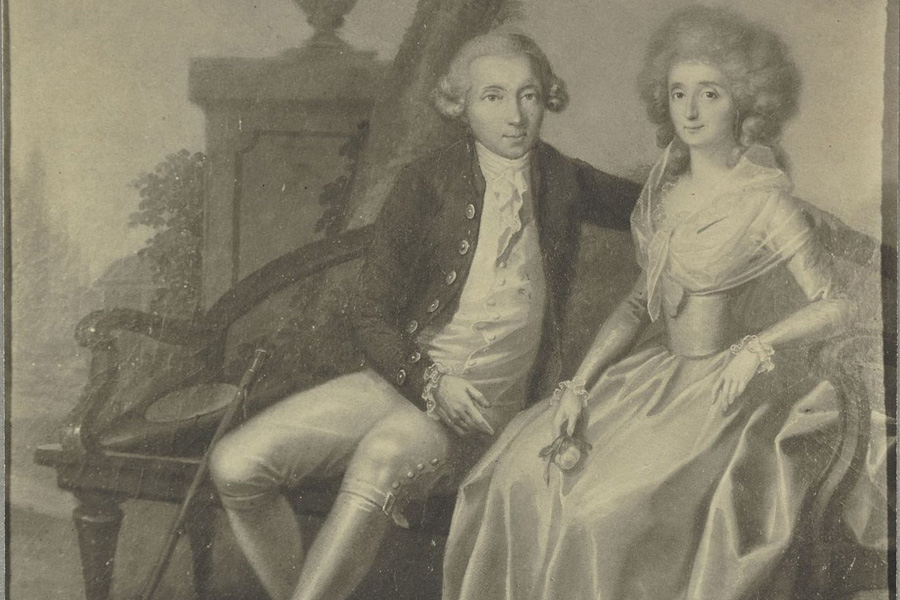
I have always been fascinated by people who live at the crossroads of prominence and obscurity. John Bartow Prevost fits that pattern. He is a name that appears in family trees more often than in public records. He belongs to a web of military men, social hostesses, and political figures whose lives stitched together the late 1700s and the early 1800s. The documentary trail for John himself is thin. The context around him is not. That context is what gives shape to an otherwise dim figure.
Family at a Glance
| Name | Relationship to John | Note |
|---|---|---|
| Jacques Marcus Prevost | Father | British army officer; military connections shaped early family status |
| Theodosia Bartow Prevost | Mother | A well connected hostess and later married a major American political figure |
| Theodosia Burr Alston | Half sister | Famous for education and tragic disappearance in 1813 |
| Aaron Burr | Stepfather | National figure; his marriage to John’s mother changed family dynamics |
| Theodosius Bartow | Maternal grandfather | Part of the Bartow family that anchored social standing |
| Ann Sands Stillwell | Maternal grandmother | Another pillar of colonial lineage |
| Augustine Prevost | Paternal uncle | High ranking officer; family military pedigree |
| Joseph Alston | Brother in law of half sister | Married Theodosia Burr Alston; political prominence |
The Family Pattern
I picture their household like a ledger where columns of rank, marriage, and land add up to social capital. On one side are names that register on national ledgers and newspapers. On the other side are private ledgers, diaries, letters, and family Bibles that may once have recorded births, deaths, and inheritances. John sits between those columns. His relatives include an officer of the British army and a woman who later married a vice president of the United States. Those facts alone map a life that touched imperial military networks and revolutionary political storms.
The Mother and Her Remarriage
Social engine Theodosia Bartow Prevost was more than a name. After Jacques Prevost’s death, her remarriage made the family famous. The house hosted political and intellectual discussions. That setting allowed John, a young man in the 1790s and 1800s, to hear talks most Americans never heard. It casts shadows. He occasionally lost track of his own life in the spotlight of his mother and stepfather.
Siblings and the Burr Connection
Family ties can be a magnet for biography. Theodosia Burr Alston, his half sister, was born into that combined household and became famous for her education and her marriage in 1801 to a governor. Her disappearance at sea in 1813 is one of the sharper historical notes attached to this family. That event, numbered and dated, echoes across John’s timeline because it altered the family’s public story and private grief. It is the kind of headline that consigns many other lives to the footnotes, and John’s is one of those quieter entries.
Ancestral Roots and Social Standing
Lineage mattered in the 18th century. The Bartow and Stillwell families anchored the maternal side. The Prevost name brought military service and imperial ties. Together they formed a matrix of property, alliances, and social expectations. I imagine estates, inventories, and wills that spoke in numbers: acres, pounds, rooms, and households. That arithmetic left a residue even when exact ledgers for John cannot be found.
Career, Finances, and Public Record
Few things are certain about John’s professional footprint. I must consider three options without clarity. First, his private business or estate administration may have left local evidence. Second, his military or public service documents may have been lost or ascribed to family members. Third, he may have lived a domestic, private life supported by family capital. The larger family pattern suggests he was born wealthy. Secure living, not public position or military command, is implied.
Timeline
- Late 1700s: Birth window for John Bartow Prevost within the Prevost-Bartow household.
- 1770s to 1790s: His father and paternal kin active in British military service.
- 1790s: Theodosia Bartow Prevost remarries, placing the family in a new public orbit.
- 1801: Theodosia Burr Alston marries; family’s political ties deepen.
- 1813: Theodosia Burr Alston disappears at sea; a marked date that reshapes public memory of the family.
- Mid 1800s: John’s presence in public records declines or becomes indistinct.
These points are anchors. Between them there is silence. Between the lines lie kitchens, ledgers, letters, and private grief.
Lesser Known Echoes
I have followed obscure references and family mentions that float in the margins. They are often small: a name in a probate inventory, a passing note in a neighbor’s diary, or a miscataloged baptism. Those traces do not always add up to a career or a headline. Still, they matter. They remind me that many lives are recorded peripherally, and that the archive is a sieve as much as a vault.
FAQ
Who was John Bartow Prevost?
I would say he was a member of an influential colonial and early republican family, a person whose life is visible more through relationships than through independent public achievement.
What were his most important family relationships?
His most consequential ties were to his mother and stepfather, and to his half sister who became a nationally noted figure. Those relationships determined both social standing and the public contours of the family story.
Did he hold public office or military rank?
There is no clear record of high public office or well documented military rank for him. The family context suggests access to such roles, but direct evidence is lacking.
Why does the family matter historically?
The family matters because it connects British military aristocracy and American republican politics. It intersects with national figures and events, and thus it illustrates how private families were woven into public transformations.
Are there precise dates for his life events?
The best anchors are decades rather than days. The late 1700s for his birth window, 1801 and 1813 for related family milestones. Beyond those markers the archive becomes thin.
Where do I find more about him?
I have followed fragments and faint echoes. The deeper records are often local: probate ledgers, family Bibles, and private correspondence. Those are places where quiet lives sometimes reassert themselves.
How To Balance Comfort And Practicality In Small Spaces With Ease
How Fast Door Frame Delivery Helps Keep Construction Projects On Schedule
Why Youtube Visibility Still Matters In An Ai Driven Content Economy
Understanding Pain And Suffering Damages In Injury Litigation