Early Life in a Famous Lineage
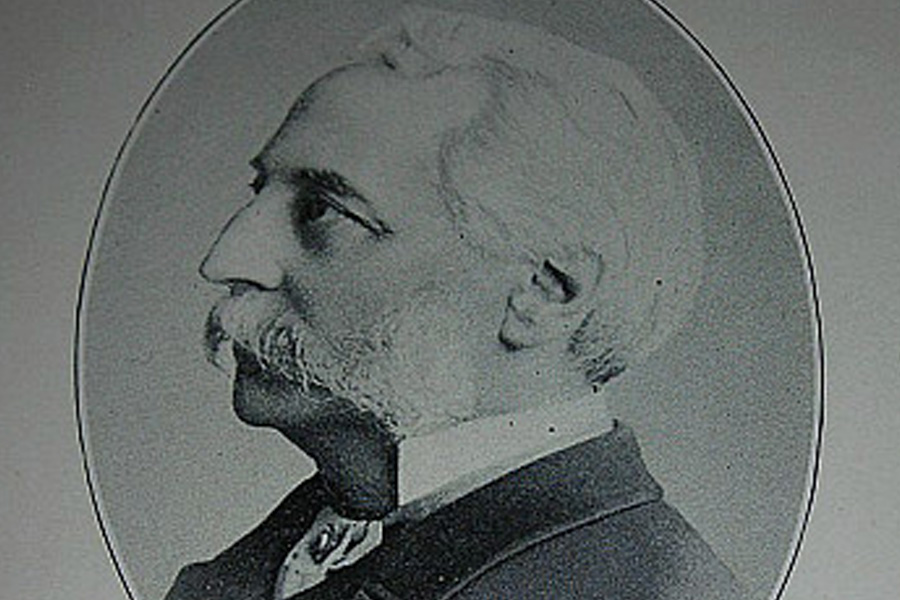
I see William Gaston Hamilton as a man born with a long shadow behind him and a demanding future ahead. He entered the world on September 15, 1832, in New York City, inside one of the most storied American families of the nineteenth century. His father was John Church Hamilton, the son of Alexander Hamilton and Elizabeth Schuyler Hamilton. His mother was Maria Eliza van den Heuvel, daughter of Jan Cornelis van den Heuvel and Charlotte Augusta Apthorp. That meant William stood at a crossroads of old political fame, mercantile strength, and New York social standing.
The Hamilton household was not a quiet one. It was a family tree with branches that reached into war, law, biography, railroads, and public service. William grew up among siblings whose lives were already stretching into history. In such a family, identity was not handed over lightly. It had to be earned, shaped, and carried with care.
The Family Around Him
William Gaston Hamilton was one of many children, and each sibling seems to have had a distinct current running through life.
His brother Alexander Hamilton lived from 1815 to 1907 and served in the Union Army, carrying the family military tradition into the Civil War era. Schuyler Hamilton, born in 1822, served in the Mexican War and later became a notable officer and author. Charles Apthorp Hamilton, born in 1826, built a career in law and public office and later served as a judge. Elizabeth Hamilton, born in 1831, made her own social and marital place in history through her marriages to Henry Wager Halleck and George Washington Cullum. Laurens Hamilton, born in 1834, died young in 1858 after a tragic accident while helping escort President James Monroe’s remains. Maria Williamson Hamilton, Charlotte Augusta Hamilton, John Cornelius Adrian Hamilton, Robert P. Hamilton, Adelaide Hamilton, Maria Eliza Hamilton, Alice Hamilton, and James Hamilton complete the broad and varied circle of siblings around William.
I find this family remarkable because it was not a simple monument to one founding father. It was more like a river delta. Each child carried the same water, but it split into different channels. Some became soldiers. Some became wives, scholars, or public figures. Some died young. Some lived long enough to see the old republic become an industrial nation.
William married Helen Maria Pierson on March 19, 1862. She came from another powerful financial family, being the daughter of Henry Lewis Pierson, a railroad financier and treasurer of the Erie Railroad. Their marriage joined two worlds of influence: Hamilton legacy on one side, railroad capital on the other. It was the kind of union that looked almost engineered, yet it also appears to have been deeply personal, rooted in family continuity and social position.
Their children were William Pierson Hamilton, born in 1869; Helen Hamilton Rhinelander, born in 1870; Laurens Hamilton, born in 1872; and Maria Van den Heuvel Hamilton Swan, born in 1874. Through these children, the family line continued into banking, marriage alliances, and another generation of social prominence.
William Pierson Hamilton became a banker and later a partner in J.P. Morgan and Company. That puts him in the engine room of American finance. Helen Hamilton married Philip Mercer Rhinelander and carried the family name into another high-status New York line. Laurens Hamilton died in 1897, unmarried, after military service. Maria Van den Heuvel Hamilton married Charles Fearing Swan and extended the family into yet another branch.
The grandchildren multiplied the legacy. Through William Pierson Hamilton and Juliet Pierpont Morgan, William Gaston Hamilton became grandfather to Helen Morgan Hamilton, Pierpont Morgan Hamilton, Laurens Morgan Hamilton, Alexander Morgan Hamilton, and Elizabeth Schuyler Hamilton. Through Helen Hamilton Rhinelander, he was also grandfather to Frederick William Rhinelander, Philip Hamilton Rhinelander, and Laurens Hamilton Rhinelander. These names themselves feel like a ledger of American elite memory, every one carrying a fragment of the old republic forward.
Career, Work, and Public Service
William Gaston Hamilton was no mere pedigree heir. He worked in engineering, railroads, telegraphy, and municipal reform. Consulting engineer and Jersey City Locomotive Works president. That alone puts him in industrial America, where iron, steam, timetables, and capital had to move in sync. His name occurs in Mexican Telegraph Company and Central and South American Telegraph Company archives. That detail counts. Telegraphy was the 19th-century nerve system. Markets accelerated, distances shrank, and continents felt smaller. William was a connection system operator and officer, not a grand theorist. His public work improving cities stands out. His work with the People’s Baths at Center Market was successful. An official report on public baths and comfort stations mentions him. Civic work like this rarely gets attention but improves city life. Public bathing, clean water, and comfort stations were unglamorous. They sustained cities. They made modern New York more livable, humane, and orderly. He was vice president of the New York Association for Improving the Condition of the Poor and headed public bath and comfort station projects. The city was a financial machine and a social organism that needed care, according to him. I see him at the confluence of riches and remedy, striving to direct privilege toward public utility. William also influenced historical literature. In the centennial history of Washington’s inauguration, he covered the Wall Street march, Lawyers’ Club entertainment, and City Hall celebration. This portrays him as a family historian, civic memory keeper, and republic ritual language enthusiast.
Marriage, Affinity, and Later Family Threads
William’s personal life seems deeply tied to New York’s overlapping dynasties. His marriage to Helen Maria Pierson linked him to finance and railroads. That connection was not just social. It placed him inside a network where engineering, capital, and family ambition reinforced one another like beams in a bridge. Later genealogy records also associate him with Charlotte Ross Jeffrey, often named Charlotte Ross Jeffrey Pierson. That relationship appears in some family records and reflects how complicated nineteenth century family documentation can be, especially among prominent households with remarriage, blended lines, and inconsistent record keeping. I treat that part as a later family-linked association rather than a simple headline fact. What remains clear is that William belonged to a family culture where relationships were never merely private. Marriage created alliances. Children extended legacy. Grandchildren renewed the name. Even tragedy, such as Laurens Hamilton’s early death, became part of the family narrative.
Extended Family Members at a Glance
The most important family members around William Gaston Hamilton include John Church Hamilton, his father and historian son of Alexander Hamilton. His mother, Maria Eliza van den Heuvel, tied him to the van den Heuvel and Apthorp families. His grandparents were Alexander Hamilton and Elizabeth Schuyler Hamilton on one side, Jan Cornelis van den Heuvel and Charlotte Augusta Apthorp on the other. His siblings included Alexander, Schuyler, Charles Apthorp, Elizabeth, Laurens, Maria Eliza, Charlotte Augusta, John Cornelius Adrian, Robert P., Adelaide, Alice, Maria Williamson, and James. His wife was Helen Maria Pierson. His children were William Pierson, Helen, Laurens, and Maria Van den Heuvel. His grandchildren included members of the Morgan, Rhinelander, and Swan lines. This was not a small family. It was a chain of names that stretched across generations like a procession of lanterns.
FAQ
Who was William Gaston Hamilton?
William Gaston Hamilton was a New York engineer, business figure, and civic reformer born in 1832 and died in 1913. He was also a grandson of Alexander Hamilton and Elizabeth Schuyler Hamilton through his father, John Church Hamilton.
Why is William Gaston Hamilton important?
I would call him important because he combined inherited prestige with visible public work. He was tied to railroads, telegraph companies, civic bath reform, and historical writing. He helped shape both infrastructure and urban improvement.
Who were his closest family members?
His closest family members included his parents John Church Hamilton and Maria Eliza van den Heuvel, his wife Helen Maria Pierson, and his children William Pierson Hamilton, Helen Hamilton Rhinelander, Laurens Hamilton, and Maria Van den Heuvel Hamilton Swan.
Was he connected to other major American families?
Yes. Through marriage and descent, he was linked to the Hamilton, Schuyler, van den Heuvel, Pierson, Morgan, Rhinelander, and Swan families. That network placed him inside a wide circle of American social and financial history.
What kind of work did he do?
He worked as a consulting engineer, a railroad and telegraph officer, and a civic reform supporter. He also contributed to historical writing and public welfare efforts in New York City.
Did he leave a legacy through his descendants?
Yes. His descendants continued into banking, marriage alliances, and prominent New York family lines. His grandson Pierpont Morgan Hamilton and other descendants kept the family name active in public memory.